

Nepal represents a blend of ancient history, vibrant cultures and scenic grandeur. Located between China and India, Nepal’s main geographical features include show-capped peaks, lower mountains, mid hills and fertile plains of tropical jungles. Nearly one-third of the total length of the Himalayas and 8 of the world’s 14 highest peaks lie in Nepal. The land-locked country covers an area 147,181 sq. kilometers ranging from 70 meters to the highest point at 8848 meters above sea level. Nepal’s popularity as a tourist destination has increased vastly over the years. While trekking and mountaineering have long been popular, an entire range of other activities are also being carried out.

Trekking
 Trekking is the highlight of a visit to Nepal. On account of the wide range of geographical features, the country nurtures a variety of vegetation and landscape. In addition to the natural endowments is the rich Himalayan culture. Thousands of visitors trek to different parts of Nepal every year to experience the charm of nature and culture. Most treks go through altitude between 1000 to 3000 meters, although some popular parts reach over 500 meters.
Protected regions along the Himalayas, like Shey-Phoksundo National park, Annapurna Conservation Area, Manaslu Eco-Tourism Area, Langtang National Park, Sagarmatha National Park and Makalu Barun National Park provide excellent trekking options. For group trekkers arrangement for food and accommodation are managed by the trekking crew, while independent trekkers can find night rest and food halt at small lodges and tea houses that dot the main trails. Independent trekkers should be self sufficient. In remote areas like Makaly, Kanchanjanga in East Nepal or Jumal, Dolpa in West Nepal, one must be self-sufficient in terms of food and water. For further details – www.taan.org.np
Boating
 Nepal provides excellent opportunities for boating from glacier-fed lakes up north down to where rivers ease into the Terai plains. With famous lakes like Phewa, Begnas and Rupa, Pokhara is one of the most popular destinations for boating.
In the terai, one can go canoeing on Narayani or Rapti rivers near Chitwan National Park. Boats and canoes can also be rented from local dealers on hourly basis. Pokhara and Chitwan are accessible both by air and road from Kathmandu. A wide variety of accommodation and other facilities are easily available in both the places.
Rock climbing
 Rock climbing is another challenging sport for outdoor lovers. Most of the areas for rock climbing are situated towards the north of Kathmandu Valley in the vicinity of the Nagarjun forest and the Shivapuri National Park Trip to these places can be combined with hiking, bird watching, nature tours and other activities. Nagarjun, 3 kilometers from Kathmandu City can be reached via Balaju near the New Bus Park. Shivapuri can be reached via Budhanilkantha which is 9 kilometers away form Kathmandu.
Bungy Jumping
 The ultimate thrill of a bungy jump can be experienced at one of the best sites in the world. Nepal’s bungy jumping site is situated 160 meters over the wild river Bhote Koshi. The site is located close to the Nepal-Tibet border at Barahbise and is a three-hour bus ride from Kathamndu. A package deal includes the jump, bus ride to the site and even meals. Nepalese are entitled to a 30 percent discount. Accommodation and other facilities are available in Barahbise.
Golf
 The popularity of golf is on the increasing stage in Nepal having five golf courses: Royal Nepal Golf Course and Gokarna Forest Golf Resort in Kathmandu, Himalayan Golf Club and Fulbari Resort Golf Course in Pokhara and Nirvana Country Club in Dharan. The best time for a play is during the dry season between October and March. Golf clubs in Kathmandu and Pokhara offer excellent courses with magnificent view of the Himalayas.
Golf is one of the most expensive sports, was started in Nepal by the Royal families. The history of golf in Nepal goes back to the time when a delegation of Rana ministers returned home with golf clubs from a visit to Scotland. They started playing golf in what is today’s Gaucharan. The first real golf tournament Lava Cup was started in 1920.
The Gokarna Forest Golf Resort is one of the finest in South Asia. It is a 72-course golf area with 18 holes. The course is set in an old forest area of the Valley. Near the resort is Harmony Spa, for soothing golf senses. Established in 1829, Royal Nepal Golf Course in Kathmandu’s Til Ganga is one of the oldest of Nepal and of Asia. The course was conferred the title of ‘Royal’ in 1911.
The Himalayan Golf Club in Pokhara situated about 6 kilometers away from the city is a recently completed pro-championship designed 9 holes golf course which is located in a beautiful amphitheater like setting of a river canyon scene with a panoramic view of the Annapurna Himalayan range.
Jungle Safari
 The tropical jungles of Nepal’s Terai preserve some of the vest wildlife habitat in the subcontinent. Jungle safaris on elephant back or jeep rides are offered at Parsa Wildlife Reserve, Bardia National Park, Chitwan National Park and Shukla Phanta Wildlife Reserve, all located in Terai. The best time to visit the Terai is during winter months when weather is more temperate. A wild range of tourist facilities are available in and around the areas.
Mountain Biking
 Nepal’s diverse terrain is what mountain bikers’ dreams are made of. Biking offers an environmentally sound way of exploring the country. It is possible to go biking the entire length of Nepal. Centuries – old dirt roads and trails offer a chance to go on extended trips to exotic locals like Annapurna and Kanchanjunga areas. 21 to 27 gear bicycles are recommended when riding through tough terrain. Mountain bikes are available for rent for a day or longer in numerous bicycle rental outlets in and around Kathmandu or Pokhara. Riders can explore rims and ridges of Kathmandu and Pokhara through off routes that weave in and out of the cities. Food and accommodation are easily available around vally and the main trail. However, it is recommended to use the services of licensed biking companies.
Hunting
 Licensed hunting is allowed in Dhorpatan Hunting Reserve in West Nepal. Dhorpatan is a prime habitat of blue sheep, ghoral, serow, Himalayan tahr, black bear, pheasant and partridge. Endangered species here are chir pheasant and red panda. Hunting is allowed only after acquiring license from the Department of National Parks and Wildlife Conservation in Kathmandu and is restricted to a certain time in a year. Dhorpatan is four days treks from Baglung which is 72km from Pokhara. The best time to visit Dhorpaton is during February through April and August through October. Accommodation is offered in tented camps by agencies or at one of the village houses. For further detail – www.dnpwc.gov.np
Honey Hunting
 Honey hunting is an age-old tradition here in Nepal. Local honey hunters show their exceptional skill by hanging themselves from cliffs as high as 300 meters using bamboo ladders and hemp ropes, while harvesting the honeycombs.
See the spectacular honey hunting on the steep bee cliffs to experience the tradition and culture of the
local people. See them while you trek in the foothills of The Himalayas.
Rafting, Kayaking and Canyoning
Rafting is one of the most exciting ways of exploring the wilderness of Nepal. Option ranges from paddle rafting a team to kayaking alone in the water. Yet another extremely popular water-sport option is canyoning to explore hidden landscapes. The best time for these activities is October through mid-December and March through early May. The government has opened 16 rivers graded on a scale of 1 to 5 for commercial rafting. Since safety is of utmost importance choosing veteran rafting company is a wise move. It is also important to observe all the safety rules and precautions provided by the River Guide. For further details – www.raftingassociation.org.np
Mountain Flights
 Mountain flights offer passengers a spectacular view of the Himalayan peaks. The one-hour mountain flight takes within camera range of some of the highest peaks in the world. The peaks seen are Gosaithan, Dorje Lhakpa, Phurbi Chyachu, Choba Bhamare, Mt. Gaurishanker, Melungtse, Chugimago, Mt. Number, Karyolung, Cho-Oyu, Gyachungkang, Pumori, Nuptse and finally Mt. Everest. Mountain flights are offered by several airlines especially in the morning from domestic airport in Kathmandu.
Paragliding
 Paragliding in Nepal gives an opportunity for aerial view of the Himalayas. Pokhara, the beautiful lakeside town at the foot of the Annapurna Mountains offers paragliding services. Best season is from Octover through April. There are various deals for the paragliding veterans and novices. Three-day introduction course is offered to beginners while tandem flights where one can fly with instructor are offered.
Ultra Light Aircraft
Ultralight aircrafts offer a breath-taking bird’s-eye view of Pokhara Valley and the surrounding mountains. Best season is from October through April. Flights take place from sunrise to 11 a.m. and from 3 p.m. to sunset every day during these months. In the half-hour flight, one can fly over Pokhara city, Phewa Lake, Sarangkot hill and ger a close to the Mt. Fishtail (Maccha Puchhre). Another option is the coploration of the Annapurna range from 12000 feet or higher in an hour. Pokhara is easily accessible from Kathmandu, Chitwan and other major towns.
Fishing and Angling
 Fishing is also gaining popularity in Nepal. There are approximately 118 varieties of fresh-water fish in the Himalayan Rivers ranging from the much sought after mahseer to the mountain stream trout-like varieties. The best season to go fishing on the white waters is before and after the monsoon from February till April and October and November.
Mountaineering
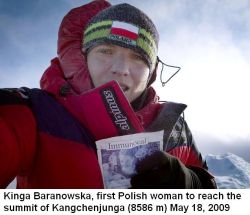
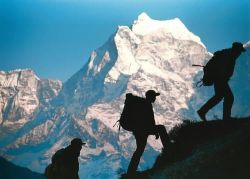
 Mountaineering is another prime attraction of Nepal. The mountains of Nepal have stood as irresistible landmarks for the world’s adventures since Nepal opened its door to visitors in the 1950s. Mountaineering can range from climbing the highest peak of the world to climbing lower peaks. Although by Himalayan standards 33 “trekking peaks” are considered minor peaks, they nonetheless provide snow and ice-climbing opportunities and are technically quite challenging. Mountaineering teams can apply for permit at mountaineering section of the Ministry of Culture, Tourism ad Civil Aviation. For further information log on to www.tourism.gov.np or www.nepalmountaineering.org .
Climbing gears can be bought or rented in Kathmandu or Pokhara. Many of the mountaineering and trekking companies also offer packages, where they provide gear, food, transportation, guides, porter services and also arrange for insurance coverage. Knowledge of altitude sickness and acclimatization process is a must for every mountaineer. The fatal sickness, also known as Acute Mountain Sickness (AMS) can he dangerous for climbers ascending 3000 meters and above. Symptoms include headache, loss of appetite and sleeplessness. Immediate descent or evacuation to lower altitude is the best cure.

Hot Air Ballooning
 To look up into the sky and see the towering mountains of the Himalaya, or even walk amongst them, is a valid and popular reason to visit Nepal. However, to glide silently amongst them is perhaps the most thrilling of all. The adventure of hot air ballooning is now available from Kathmandu. The balloon will float approximately 1,200 to 1,500m above the valley, bringing passengers close to 3,000m high. From this altitude the entire Himalaya Range can be viewed due to the 360 degree visibility hot air ballooning affords, together with fantastic views of the Kathmandu valley below.
* Source : – http://www.nepalmountainnews.com/
** Previous story : – Trekking




** zapraszam na relacje z wypraw polskich himalaistów.