Trekking Tours

Posted by Author On 5/29/2009

POST-SUMMARY-HERE

Everest, Everest History, Everest Firsts

Posted by Author On 5/29/2009

POST-SUMMARY-HERE

Expedition, expedition list, expeditions on 8000m peaks

Posted by Author On 5/29/2009

POST-SUMMARY-HERE

Showing posts with label winter manifesto. Show all posts

Winter Broad Peak timeline: No winners yet in a tough game

Posted by himalman On 12/18/2008 09:38:00 am 1 comments

ExWeb special - Winter Broad Peak timeline:
No winners yet in a tough game

(K2Climb.net/MountEverest.net) Up until now only 8 out of all 14 eight-thousanders have been winter climbed. Over the previous weeks ExWeb have run debriefs on all the first winter ascents, and also all winter, or near winter, summits in Himalaya.

But what about winter attempts on the peaks ahead? Last week Simone Moro offered winter history for Makalu; while ExWeb’s contributor Rodrigo Granzotto Peron dodged flooding and power outages in his home town of Brazil for a skinny on the remarkably few winter attempts on Broad Peak and Nanga Parbat (check in for NP tomorrow).

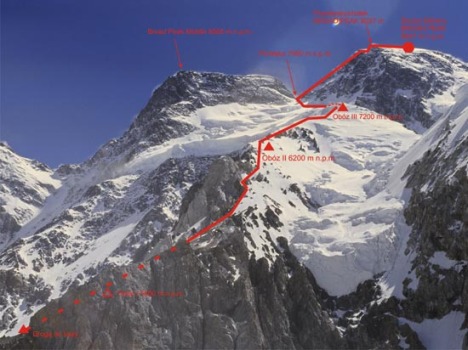
trasa-zima-broad-peak

HiMountain winter expedition to Broad Peak - 2008/09 - route


Broad Peak Winter History
By Rodrigo Granzotto Peron

For two weeks in the winter of 1983, Andrzej Zawada and Jacques Olek researched the Baltoro Glacier; checking the weather and routes on Broad Peak and both Gasherbrums for future expeditions. Their conclusion was that “winter conditions were much more severe than in the Everest region.”

Polish climbers breaking trail

Five years later, in February 1988 Polish Maciej Berbeka (Manaslu winter 84, Cho Oyu winter 85) arrived for the first winter attempt on Broad Peak. It became the most successful winter climb on Falchan Kangri yet.

Berbeka reached the Foresummit by the normal route one month later. Very strong winds blowing from the real summit prevented him to do the first winter ascent of an 8000er in Pakistan.

Here come the Spaniards

In 2003 Spanish Juanito Oiarzabal arrived with a strong team: Juan Vallejo, Mikel Zabalza, Losu Bereziartu and Italian Silvio Mondinelli. They reached 6500m on the normal route, but after the destruction of Camp II (February 9th) and Camp I (February 20th), they headed home without summit.

(Ed note: the Spanish team reportedly said that just to get to BC was a long, frozen walk from hell.)

Latest attempts: another Italian against all odds

Four years later, in 2007 Simone Moro decided to try his luck, teaming up with Pakistan Shaheen Baig, again on the normal route. Progress was very slow as a result of high winds and incredible amount of snow on the route. The expedition was called off after reaching 6800 meters.

With valuable experience bagged, Simone Moro was back already the next year, in 2008 with Pakistan climbers Shaheen Baig and Quadrat Ali. But logistics wrecked the schedule right from the start.

The three climbers arrived BC very late (February 2nd). According to Simone, “this expedition is a charade of inefficiency, bad luck and unhelpful people.” Still, the mountaineers climbed the normal route until 7800 meters before calling the expedition off due to high winds in early March.

* see :

- Ice Warriors not give up - HiMountain winter expedition to Broad Peak - 2008/09. HiMountain wyprawa zimowa Broad Peak - 2008/09. /Version english and polish/

- Don Bowie’s website

- Polish winter expedition to K2, 2002/3 /Version polish and english/

- Polish-Italian winter expedition to Shisha Pangma (8027m), 2005 /Version polish and english/

- Winter Manifesto of Krzysztof Wielicki - Manifest zimowy Krzysztofa Wielickiego /Version polish and english/

- 2007 Winter Nanga Parbat: It’s over - http://www.mounteverest.net/news.php?id=15523

Exweb Week-In-Review is sponsored by HumanEdgeTech the world’s premier supplier of expedition technology. Our team helps you find ultra light expedition tech that works globally.
e-mail or call +1 212 966 1928

** Read these stories - and more! - at ExplorersWeb.com

*** oryginal post by : - http://himalman.wordpress.com/

“Ice Warriors” not give up.
HiMountain winter expedition to Broad Peak - 2008/09.

The eighties are long gone but a warrior’s soul never dies: The tough bunch of climbers who wrote the coolest pages of mountaineering history 20 years back are still kicking - and more. In only a few weeks, they will take on any mountaineer’s ultimate nightmare: A winter climb on a Pakistan 8000er.
Not even Messner could beat them: Polish climbers have all the first winter ascents on Himalayan 8000ers.

Winter Manifesto of Krzysztof Wielicki :

The golden decade of Polish Himalayan mountaineering, besides the unquestionable personal accomplishments of Jurek Kukuczka, Wanda Rutkiewicz, Wojtek Kurtyka and others, also saw winter achievements that were a team rather than individual success. It was particularly noticeable during the winter expeditions how the whole team worked for the result. In Winter it is difficult to achieve success without teamwork. Climbing in the Alps or the Tatras in wintertime is no longer surprising to anyone: it was the natural course of things, an attempt to raise the challenge without raising the altitude. The same had to occur in high mountains too.And it’s great that it was achieved by Poles. Jurek Werteresiewicz drew up a programme, Andrzej Zawada implemented it and many of us put it into practice, often successfully but there were failures as well.In recent years a total withdrawal from wintertime climbing could be observed in the Tatras, the Alps as well as the Himalayas…..

… We were successful in high mountain winter explorations. After all, half of fourteen 8000-metre peaks were climbed by Poles, with in just eight years (1980-1988) to boot. Six unconquered peaks are waiting for us, but volunteers are nowhere to be seen. Let the nickname “Ice Warriors”, given us by Englishmen, be inscribed in the history of Himalayan climbing for ever.

Today started next winter expedition -

HiMountain winter expedition to Broad Peak - 2008/09.

trasa-zima-broad-peak

HiMountain winter expedition to Broad Peak led by Artur Hajzer , the team : Robert Szymczak and Don Bowie from Canada.

Artur Hajzer is a Polish mountaineer best known for the first winter ascent of Annapurna on February 3, 1987 together with Jerzy Kukuczka. He was member of latest winter expedition - 2006/07 Winter Nanga Parbat!

Upcoming winter expeditions on 8000es

Artur Hajzer will lead Robert Szymczak and Don Bowie for a winter attempton Broad Peak; Jacek Teler will lead a team on Nanga Parbat. Simone Moro will attempt Makalu, teaming up with Denis Urubko. Pavel Krupièka, Jan Krabec and Milan Wlasák will atempt Manaslu.

* see :

- Don Bowie’s website

- Polish winter expedition to K2, 2002/3 /Version polish and english/

- Polish-Italian winter expedition to Shisha Pangma (8027m), 2005 /Version polish and english/

- Winter Manifesto of Krzysztof Wielicki - Manifest zimowy Krzysztofa Wielickiego /Version polish and english/

- 2007 Winter Nanga Parbat: It’s over - http://www.mounteverest.net/news.php?id=15523

Lodowi wojownicy nie dają za wygraną.

HiMountain wyprawa zimowa Broad Peak — 2008/09

Rusza kolejna polska zimowa wyprawa na ośmiotysięcznik — „HiMountain wyprawa zimowa Broad Peak — 2008/09”. Celem wyprawy jest pierwsze w historii zimowe wejście na 12-ty szczyt świata Broad Peak (8051 m) w Karakorum (Pakistan).

Himalaizm zimowy to iście polska specjalizacja. Mimo dużej ilości prób podejmowanych przez najlepszych alpinistów z całego świata, tylko Polacy (wyjątkiem jest Włoch Simone Moro, który zdobył Shisha Pangma razem z Piotrem Morawskim - Polish-Italian winter expedition to Shisha Pangma (8027m), 2005 /Version polish and english/) stawali do tej pory na ośmiotysięcznikach zimą (zdobyli już osiem). Jak pisał Krzysztof Wielicki w swoim słynnym Manifeście… “Niech przydomek ” Ice Warriors”, nadany nam przez Anglików, na stałe zapisze się w historii himalaizmu.” Ostatnia zimowa próba to Winter Nanga Parbat - zimowa wyprawa Wielickiego z 2007r ; niestety wyprawa nie zakończyła się sukcesem , himalaistów pokonała pogoda.

Sześć spośród czternastu ośmiotysięczników pozostaje niezdobytych, z tego pięć w Pakistanie i jeden w Nepalu.

trasa-zima-broad-peak

Trasa wyprawy zimowej na Broad Peak 2008/09

Wspomniany Simone Moro dwukrotnie próbował zmierzyć się zimą z Broad Peakiem, za każdym razem bezskutecznie. Co znamienne, żaden spośród pięciu pakistańskich ośmiotysięczników (cztery w Karakorum oraz Nanga Parbat) nie został do tej pory zdobyty zimą. O krok od wejścia na główny wierzchołek Broad Peaku zimą był Maciej Berbeka. Osiągnął on przedwierzchołek, tzw. Rocky Summit (8035 m), który jest niższy od wierzchołka głównego zaledwie o 16 metrów, ale oddalony od niego o godzinę wspinaczki.

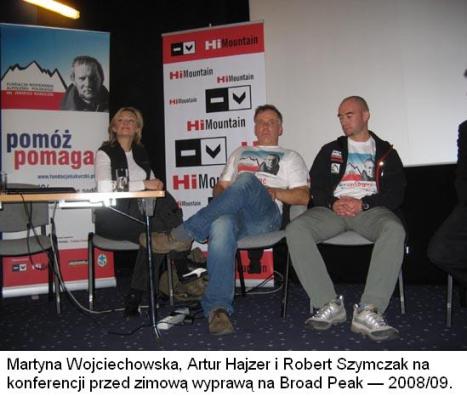
martyna-wojciechowska-artur-hajzer-i-robert-szymczak-new

W przeddzień odlotu wyprawy, 8 grudnia 2008, w warszawskim Centrum Olimpijskim odbyła się konferencja prasowa uczestników wyprawy, którą prowadziła zdobywczyni Everestu, redaktor naczelna National Geographic Polska, Martyna Wojciechowska.

W wyprawie uczestniczy trzech himalaistów: Artur Hajzer — kierownik, Robert Szymczak i Don Bowie z Kanady. Wspomagani będą przez dwu tragarzy wysokościowych.

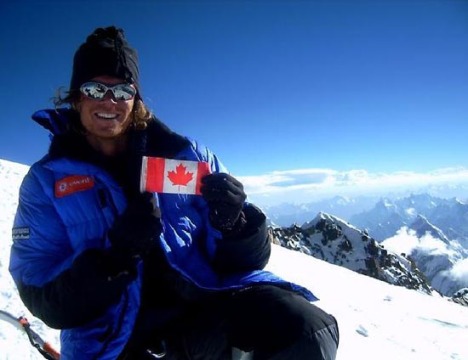
don-bowie

Don Bowie.

Sprzęt i żywność wyprawy, w sumie 86 ładunków, zostały już dostarczone do podnóża góry na lodowcu Godwin Austen i oczekują w miejscu, gdzie stanie baza wyprawy. Ładunki przetransportowano już 15 października, ponieważ — jeżeli wierzyć zapewnieniom pakistańskiej agencji — w okresie zimowym nie jest możliwe, aby w tamtym rejonie przeszła karawana tragarzy. Uczestnicy wraz ze sprzętem osobistym i ładunkami uzupełniającymi mają dolecieć do bazy helikopterem między 19 a 21 grudnia 2008 roku.

* strony o wyprawach zimowych :

- 2007 Winter Nanga Parbat: It’s over - http://www.mounteverest.net/news.php?id=15523

- Polish winter expedition to K2, 2002/3 /Version polish and english/

- Polish-Italian winter expedition to Shisha Pangma (8027m), 2005 /Version polish and english/

- Winter Manifesto of Krzysztof Wielicki - Manifest zimowy Krzysztofa Wielickiego /Version polish and english/

goryonline.com

** zapraszam na relacje z wypraw polskich himalaistów.

*** Źródła : - wiadomośći PZA - http://himalman.wordpress.com/

The golden decade of Polish Himalayan mountaineering, besides the unquestionable personal accomplishments of Jurek Kukuczka, Wanda Rutkiewicz, Wojtek Kurtyka and others, also saw winter achievements that were a team rather than individual success. It was particularly noticeable during the winter expeditions how the whole team worked for the result. In Winter it is difficult to achieve success without teamwork. Climbing in the Alps or the Tatras in wintertime is no longer surprising to anyone: it was the natural course of things, an attempt to raise the challenge without raising the altitude. The same had to occur in high mountains too.

And it’s great that it was achieved by Poles. Jurek Werteresiewicz drew up a programme, Andrzej Zawada implemented it and many of us put it into practice, often successfully but there were failures as well.

In recent years a total withdrawal from wintertime climbing could be observed in the Tatras, the Alps as well as the Himalayas. The late Andrzej Zawada would remark: “Tell me what you’ve done and I’ll tell you who you are (that is to say, what you're worth). Winter experiences were valuable, however. Meanwhile the standards have been lowered by the rat-race to easy and quick successes (which actually has been the case in every field).

No-one dreams of climbing the great walls of the Himalayas, of new routes, traverses… The attitude is to climb Mt. Everest if you have cash and if not, another easy 8000-metre mountain, as long as it’s fast and easy. When, after many years, I met Elisabeth Hawley in Katmandu in January this year, we began reminiscing the 1970s and 1980s, when the Japanese, Poles, Englishmen, Frenchmen, Russians and the Slovenians would come with sports programmes, in order to compete with the others, to reach places that had not been reached so far, to go down in the history of conquests of the highest mountains. There is the same number of expeditions as before but they lack ambitions goals. The ambitious ones can be counted on the fingers of one hand. Generally, there is a fad for easy and pleasant climbing, preferably at weekends because it does not require sacrificing your time or career. It has to be fun. It has to be cool.

As for our Polish scene, the Sports Committees, if they exist at all, lack creativity. Committees and boards tend to accept programmes aimed at a quick, usually personal success of the Himalayan climbers that God still keeps alive. I realize that we live in times when each success has to be associated with a name, with individuals who easily lend themselves to the requirements of the media. But why is it a problem to proclaim: “Poles have climbed Sisha Pangma or K-2 in winter"?

According to the old rule, you should do what you do best. We were successful in high mountain winter explorations. After all, half of fourteen 8000-metre peaks were climbed by Poles, within just eight years (1980-1988) to boot. Six unconquered peaks are waiting for us, but volunteers are nowhere to be seen.

Let the nickname “Ice Warriors”, given us by Englishmen, be inscribed in the history of Himalayan climbing for ever.

We missed out on the great exploration of the Himalayas irreversibly, and it is more and more difficult to find new (logical) routes. We could still improve our style, and we could revive the best moments of wintertime experiences. I know that for some people wintertime climbing is “the art of suffering” but I also know that for others it is a male adventure, with teamwork, the rule "one for all and all for one", brotherhood and common goals. Those who have experienced that do not need to be convinced, whereas the majority of adversaries of wintertime Himalayan climbing can be found among those who simply have not tried it or are unable to work in a team, are afraid to lose their “libero” position, afraid of a violation of their individuality. We are going separate ways! We have done one half of the job. Now it’s your turn to finish it: you the young, angry and ambitious. We are giving you eight years, the same time as we needed. It’s fair enough, isn’t it? If you could pull it off, wouldn’t it be great? Can you imagine that? All 8000-metre peaks conquered for the first time in Winter, all by Poles. There is a chance for success. It is a game worth devoting time, money and efforts. Now is the time to make decisions. This proposal is addressed to the Polish Mountaineering Association: how to create the right environment, how to make “the young” interested in this idea? You may count on my generation, on our help, our experience, even our active participation. The choice is yours! If you do not take up the challenge, we shall have to take it on our old shoulders, without a guarantee of success. K-2, Makalu, Nanga Parbat, Gasherbrum I and Gasherbrum II, Broad Peak are waiting for you (or us).

Let’s join Europe, with our head held high and with self-esteem. There is little time left!

*Manifesto on 2002 r - Polski Związk Alpinizmu

2007 Winter Nanga Parbat: It’s over - http://www.mounteverest.net/news.php?id=15523


Pierwsze wejścia

Lp.

Nazwa

Wysokość
m n.p.m.

Data zdobycia

Pierwsi zdobywcy

Data zdobycia zimą

Pierwsi zdobywcy

1

Mount Everest

ok. 8850

29 maja 1953

Edmund Hillary (Nowa Zelandia),
Norgay Tenzing (Nepal)

17 lutego 1980

Krzysztof Wielicki i
Leszek Cichy (Polska)

2

K2

8611

31 lipca 1954

Achille Compagnoni i
Lino Lacedelli (Włochy)

niezdobyty zimą

3

Kanczendzonga

8586

25 maja 1955

George Band i
Joe Brown (Anglia)

11 stycznia 1986

Jerzy Kukuczka i
Krzysztof Wielicki (Polska)

4

Lhotse

8516

18 maja 1956

Fritz Luchsinger i
Ernst Reiss (Szwajcaria)

31 grudnia 1988

Krzysztof Wielicki (Polska)

5

Makalu

8463

15 maja 1955

Lionel Terray i
Jean Couzy (Francja)

niezdobyty zimą

6

Cho Oyu

8201

19 października 1954

Sepp Joechler i
Herbert Tichy (Austria),
Psan Dawa Lama (Nepal)

12 lutego 1985

Maciej Berbeka i
Maciej Pawlikowski (Polska)

7

Dhaulagiri

8167

13 maja 1960

Kurt Diemberger i
Albin Schelbert (Austria),
Nawang Dorje (Nepal)

21 stycznia 1985

Andrzej Czok i
Jerzy Kukuczka (Polska)

8

Manaslu

8156

9 maja 1956

Toshio Imanishi (Japonia),
Gyaltsen Norbu (Nepal)

12 stycznia 1984

Maciej Berbeka i
Ryszard Gajewski (Polska)

9

Nanga Parbat

8126

3 lipca 1953

Hermann Buhl (Austria)

niezdobyty zimą

10

Annapurna I

8091

3 czerwca 1950

Maurice Herzog i
Louis Lachenal (Francja)

3 lutego 1987

Artur Hajzer i
Jerzy Kukuczka (Polska)

11

Gasherbrum I

8068

4 lipca 1958

Andy Kauffman i
Pete Schoening (USA)

niezdobyty zimą

12

Broad Peak

8047

9 czerwca 1957

Hermann Buhl,
Kurt Diemberger,
Markus Schmuck i
Fritz Wintersteller (Austria)

niezdobyty zimą

13

Gasherbrum II

8035

7 lipca 1956

Sepp Larch,
Fritz Moravec i
Hans Willenpart (Austria)

niezdobyty zimą

14

Shisha Pangma

8013

2 maja 1964

Hsu Ching (Chiny)

14 stycznia 2005

Piotr Morawski (Polska) i
Simone Moro (Włochy)

Złota dekada polskiego himalaizmu prócz niepodważalnych osobistych wyników Jurka Kukuczki, Wandy Rutkiewicz, Wojtka Kurtyki i innych to równieżnasze zimowe dokonania, które były bardziej sukcesem grupowym niż indywidualnym. To na wyprawach zimowych szczególnie było widoczne , jak zespół pracował na wynik. Trudno jest zimą osiągnąć sukces jednostce bez pomocy zespołu. Wspinanie w porze zimowej w Alpach czy Tatrach nikogo już nie dziwi: było naturalną koleją rzeczy , próbą podniesienia poprzeczki bez zwiększania wysokości. To musiało się stać i w wgórach wysokich.
Dobrze, że stało się to za sprawą Polaków. Jurek Werteresiewicz nakreślił program, Andrzej Zawada wprowadził go w życie, a wielu z nas go realizowało, często nawet z powodzeniem, chociaż były i porażki.
Wostatnich latach można zauważyć całkowity odwrót od wspinania się zimą. Dotyczy to Tatr, Alp, a także Himalajów. Ś.p. Andrzej Zawada zwykł mówić: "Powiedz mi, co zrobiłeś zimą w Tatrach, a powiem ci kim jesteś ( czytaj , ile jesteś wart). Doświadczenia zimowe były jednak w cenie.Tymczasem wraz z owczym pędem do szybkiego sukcesu ( na każdym zresztą polu), obniżono poprzeczkę. Już nie marzy się o przejściu wielkich ścian Himalajów, o nowych drogach, o trawersach.
Myśli się, aby wejść na Mt. Everest, jeśli ma się kasę, a jeśli nie , to na jakiś łatwy ośmiotysięcznik, byle szybko, byle łatwo. W styczniu tego roku, gdy po latach spotkałem się z panią Elisabeth Hawley w Katmandu, zaczęliśmy wspominać lata 70.i 80.,kiedy to przyjeżdżali Japończycy, Polacy, Anglicy, Francuzi, Rosjanie, Słoweńcy ze sportowymi programami, by rywalizować z innymi, zdobywać, co jeszcze nie zdobyte, zapisać się w historii podboju gór najwyższych. Wypraw przybywa tyle samo, ale ambitnych celów już nie. Można je policzyć na palcach jednej ręki. W ogóle nadeszła moda na wspinanie łatwe, przyjemne, najlepiej weekendowe, bo nie wymaga poświęcenia czasu lub kariery. Po prostu "for fun" i by było " cool".
....Rozumiem teraz takie czasy, że każdy sukces musi być kojarzony z nazwiskiem, osobą, że to dobrze podaje się wymogom medialnym, ale co stoi na przeszkodzie, by znów mówiono: Polacy weszli zimą na Sisha Pangma czy na K-2!
Stara zasada mówi, że powinno się robić to , co nam dobrze wychodzi. Dobrze zapisaliśmy się w zimowej eksploracji w górach wysokich. W końcu z czternastu szczytów ośmiotysięcznych połowę zdobyli Polacy i to w ciągu zaledwie ośmiu lat (1980 -1988). Jeszcze sześćszczytów czeka na nas, są dziewicze, a chętnych nie widać.

Niech przydomek " Ice Warriors", nadany nam przez Anglików, na stałe zapisze się w historii himalaizmu.

.. My
zdobyliśmy połowę. Teraz kolej na Was: młodych, gniewnych , ambitnych. Dajemy Wam też osiem lat, tyle , ile nam było potrzeba. To chyba fair ? To byłaby sprawa, możecie sobie wyobrazić? Wszystkie szczyty ośmiotysięczne zdobyte po raz pierwszy zimą, wszystkie przez Polaków. Jest taka szansa, to jest gra warta poświęcenia czasu, sił, środków. To czas na decyzje. To propozycja pod adresem PZA, jak stworzyć warunki, jak zainteresować "młodych" taką ideą? Ze strony mojego pokolenia możecie otrzymać pomoc, doświadczenie, nawet aktywne uczestnictwo. Wybór należy do Was! Bo jeśli nie, to ...my zmuszeni będziemy wziąć to na swoje barki, już stare i nie gwarantujące, że cel osiągniemy. Przed Wami ( lub przed nami) K-2, Makalu, Nanga Parbat, Gasherbrum I i Gasherbrum II , Broad Peak.

*Manifest został odczytany w 2002 roku na zjeździe Polskiego Związku Alpinizmu

Winter Nanga Parbat - zimowa wyprawa Wielickiego z 2007r ; niestety wyprawa nie zakończyła sie sukcesem , himalaistów pokonała pogoda o czym napisze już niebawem....

Sociofluid

Promote cool website

Climbing courses and training - PZA Climbing Center in Tatras
One of best website about Mt Everest
www.Everest1953.co.uk
You can help

Trekking agency

advertise on blog

MY Favorite books...


    Polish Himalayas on Facebook

    Great tops for everyone!

    Mountaineering is my hobby and profession of walking, hiking, trekking and climbing up mountains. It is also sometimes known as alpinism, particularly in Europe.

    Picasa Web Albums

    Himalman's Weblog