Trekking Tours

Posted by Author On 5/29/2009

POST-SUMMARY-HERE

Everest, Everest History, Everest Firsts

Posted by Author On 5/29/2009

POST-SUMMARY-HERE

Expedition, expedition list, expeditions on 8000m peaks

Posted by Author On 5/29/2009

POST-SUMMARY-HERE

Showing posts with label equipment. Show all posts

Vasque M-Finity boots bring you back home.

Author of post : Angela Hawse.

For me, a good mountain boot not only has to climb well, it has to get me to the climb. I’m not carrying Vasque M-Finitya boot on my back, I’m going to wear it all day, there and back. I checked out the Vasque M-Finity on the 13,770-foot Grand Teton during the early part of last summer.

My clients, sporting their sticky rubber approach shoes, looked on with a bit of anxiety as I laced up my flashy mountain boots at the trailhead.

“Just testing,” I assured them, “You’ll be fine.”

But I wondered if I’d “be fine” on the 5,000-foot hump up to the lower saddle and the 7,000-foot descent back down to the car tomorrow in the beasts. No doubt, the boots were a tad overkill for the summer hike, but a test drive is a test drive.

Aside from being too warm, the boots were actually pretty comfortable on the approach. The fun began the next morning on the Owen Spalding route. Conditions ranged from patches of snow, to wet and icy rock. I was super psyched on the added security the M-Finity’s provided as I safeguarded my clients, who were less than sure of their footing, on the tricky bits. Add a little snow and ice and moderate becomes desperate to the uninitiated.

I loved climbing in a good quality pair of light, rigid boots and when we got to the business on OS, I was whistling Dixie. The Vibram rubber sole and carbon-fiber shank were stiff and plenty sticky on little edges and the odd smear. If Vasque puts Stealth rubber on these, like they do on other products, it would no doubt climb even better.

Surprisingly enough, I didn’t suffer too much on the 7,000-foot descent. I even wore them again the next trip, trailhead to trailhead. Same results.

Although a little heavy and warm for a summer mountaineering boot, these kickers are going to be secret weapons for bigger alpine climbs. I like a boot that is stiff and edges well. This one does. I also like a boot with plenty of rand, for extra grip in wide cracks, and this one certainly has full coverage. The toe box is plenty roomy to wiggle my toes, which I like as long as I can crank the laces tight enough to keep the boot snug. Excels here too.

The M-Finity performed well with a light strap-on crampon and I can’t wait to step into some technical spikes when the ice forms up. If you are on the hunt for a warm, stiff, technical boot that is light, built to last and performs well on both rock and ice, you’ll dig this one.

* Author of post : Angela Hawse.
Posted on: – http://www.alpinist.com/

** see – http://www.vasque.com/

** Previous story : – Equipment.

Buty Vasque M-Finity – Alpinistyczne damskie.

But stworzony specjalnie do wspinaczki lodowej i mikstowej oraz szybkich wejść w stylu alpejskim. Cholewka z elementami Kevlaru, wodoodporna/oddychająca wyściółka, ocieplina Thinsulate oraz baza podeszwy wykonana z włókien węglowych – wszystko to czyni ten model zwinnym oraz ciepłym. System szybkiego sznurowania pozwala na idealne dopasowanie buta do kształtu stopy. Doskonały wybór na twój następny wypad w świat pionowego lodu.

Dane techniczne:
  • Cholewka: skóra Split
  • Cholewka: tkanina Kevlar/Nylon, tkanina Tec Tuff
  • Warstwa górna podeszwy: włókno węglowe
  • Środkowa warstwa podeszwy: EVA
  • Bieżnik: Vibram Kommandos Outsole
  • Wyściółka: Drilex
  • Wkładka: Ocieplana
  • Inne: podwójny język Gemini; gumowy rant chroniący palce; miękkie zakończenie cholewki, zaczepy na raki, wodoodporne
Waga: 1590 g
Rozmiary: 6-12, 13, 14
* Źródło : – http://www.vasque.pl/buty/

goryonline.com

*zapraszam do subskrypcji mojego bloga :

AddThis Feed Button

** zapraszam na relacje z wypraw polskich himalaistów.

Mountaineering Boots – Vasque Ice 9000.

Posted by himalman On 6/28/2009 07:57:00 am 0 comments

Author of post : Julia Niles

I put these boots to the test on Denali. They sailed me up and down the mountain attached to vasque-ice-9000snowshoes, skis and crampons. I wore them nonstop for 21 days (when I wasn’t sleeping or lucky enough to be in my down booties) and never got a single blister. Nothing broke off despite the abuse I gave them: kicking blocks of ice while building walls, playing glacier Frisbee and lacing as tight as possible at times.

My feet never got unusually cold, but I used over-boots above 17,000 feet. A problem with this blend between a hardshell and a softshell is that you cannot leave the shell outside overnight. We had three guides in a tent without much extra space. If left outside, the outer shell would freeze or fill up with snow which was not good because the inner booties are too thin to keep your foot insulated from the outer boot. After a while I developed a system of keeping them between the two pads under my feet, but this might be uncomfortable for some people. The other issue with this system is that the inner bootie is molded and not designed at all for wearing without the outer shell. I like having the ability to wear just the inner shell if just getting out of the tent to pee or some other short trip. Overall, however, the Ice 9000’s comfort, warmth and lightweight design would compel me to use these boots again on Denali or elsewhere.

* Author of post : Julia Niles
Posted on: – http://www.alpinist.com/

** see – http://www.vasque.com/

** Previous story : - Equipment.


goryonline.com


* zapraszam do subskrypcji mojego bloga :

AddThis Feed Button

** zapraszam na relacje z wypraw polskich himalaistów.

Dla jednych to "zabicie niemożliwego", dla innych koniec pewnej epoki, dla jeszcze innych niezbędny środek mogący ocalić życie - gorąca dysputa przetoczyła się przez środowisko wspinaczkowe po wbiciu w maju tego roku pierwszych spitów na Mount Evereście.

Willie Benegas i Adrian Ballinger, korzystając z wiertarki Hilti nawiercili otwory pod sześć 10cm spitów Mammuta - mocując na nich dwie linie poręczówek (jedną dla ruchu w górę, drugą dla zejścia) na wysokości około 7700 metrów w miejscu zwanym Żółte Skały (Żółta Wstęga - Yellow Band), powyżej obozu III na Grani Południowo-Wschodniej, czyli klasycznej drodze od strony nepalskiej.

Yellow Band New
Zespół przewodników i Szerpów oczyścił teren z luźniejszych kamieni oraz uprzątnął stare liny (ponad 30kg zostało zniesionych), które niejednokrotnie mocowane były do jeszcze starszych lin trzymających się tylko dzięki "zmrozeniu" ich z podłożem. Brytyjski przewodnik Kenton Cool, który już sześciokrotnie stawał na szczycie Everestu tak opisuję dotychczasową sytuację: "Żółte Skały oferują prawie zerową opcję dla umocowania poręczówek, a za każdym z siedmiu razy, kiedy przekraczałem je, przychodziło mi na myśl, że zdarzy się tu jakieś nieszczęście. Czasami 8-9 wspinaczy korzystało w tym samym czasie z tej samej poręczówki osadzonej w bardzo wątpliwym miejscu".

Yellow Band 1 New
Yellow Band 2 New
W dominującej opinii organizatorów wypraw komercyjnych ma to bez wątpienia zapewnić bezpieczeństwo Szerpów, zachodnich przewodników i ich klientów, którzy niejednokrotnie musieli zmagać się z "pajęczą siecią" dotychczasowych, starych lin. Teraz ma dla nich być znacznie bezpieczniej, dużo szybciej i mniej pogmatwane.

Yellow Band 3 New
Na tym nie koniec. Eric Simonson, lider komercyjnej IMG Expedition zapowiada podobną akcję dla znajdującego się powyżej Żebra Genewczyków oraz dla progu skalnego poniżej wierzchołka południowego. Z sarkazmem, ale i pewną nostalgią można zapytać co będzie następnie? Stalowa linka z bazy wprost na wierzchołek?

Tak zwane środowisko zareagowało różnie. Najciekawsze jest ukazanie wielowymiarowości problemu, który jest konsekwencja wbicia zaledwie sześciu spitów: Reinhold Messner kolejny już raz określił drogę przez południową ścianę "goszczącą" rocznie ponad 500 wspinaczy jako "via ferrata", czyli po naszemu "żelazna perć". Serwis Planetmountain.com podkreśla, że w żaden sposób Everest nie stał się ani łatwiejszy, ani mniej niebezpieczny dla "zaimprowizowanych" alpinistów. Mark Reeves określa sytuację jako "duchowy gwałt" na Czomolungmie, na stokach której jesteśmy jedynie gościami. Ian Parnell z nostalgią komentuje: "W moim idealnym świecie nawet nieśniłoby się nikomu zabierać spitownicę w góry, ale oczywiście świat jest daleki od ideału... Południowo-wschodnia grań jest tak daleko od tego czym jestem zainteresowany w himalaiźmie, że nie dbam o to co tam robią" - przy czym nadmiena jeszcze, że spity w Himalajach to nie jest świeża idea przewodników komercyjnych - przytaczając także przykład północnej granii ze stałymi metalowymi drabinami. John Arran zauważa, że jest to szansa na... podniesienie poziomu, bo podnosi się poprzeczka dla tego co można okreslić umownie jako "wyczyn sportowy"...

A jaka jest Wasza opinia na ten temat?

* Żródło : - http://www.goryonline.com/


goryonline.com


* zapraszam do subskrypcji mojego bloga :

AddThis Feed Button

** zapraszam na relacje z wypraw polskich himalaistów.

La Sportiva Batura Boots: Comfort and Performance.

Posted by himalman On 6/07/2009 11:03:00 am 0 comments

Weight: 2 pounds, 2.7 ounces

MSRP: $500

La Sportiva has created another fine technical boot with the new Batura. I’ve used the Nuptse in the Himalaya, the Nepal Top all over the North Cascades and Ouray, the Trango Ice Evo and Women’s Trango Evo GTX in Patagonia and at home in the San Juans. I’ve been happy with all of these La Sportiva models, which tend to fit narrow feet, like mine, especially well. I’m psyched on the new Batura because it fills the gap between the warmth of the Nuptse, as a quasi-double boot, and the technical performance of the Nepal Top or Evo. Its weight-to-warmth ratio sets it apart from the pack of other boots I’ve used over the years.

The skeptic in me scoffed at the zipper and funkadelic appearance on first impression, but after a few days they’d won me over. I’m not a fan of zippers on anything that could compromise functionality, but the beefy nature and streamlined, asymmetrical detail of the zipper on the outer gaiter proved to be simple and, within the limited season I used them, super durable. The entire system with internal lacing and external zipper was easy to get tight with cold fingers or loosen quickly when needed.

The boots performed great on both steep and moderate ice routes. They offered excellent flex in the ankles thus climbing well for French technique and side-hilling. Without crampons the boots kick steps with the best of them and edge on a dime. One notable difference that added to the warmth and comfort over La Sportiva’s other models is a slightly larger toe box, giving some wiggle room and more comfort on approaches. For a stiff pair of boots, they hike super well. Overall, if it’s not evident already, the Baturas feel and perform the way they’re supposed to.

The gaiter and zipper combo are definitely waterproof, even more so than I expected. This compromises the breathability of the boots, but that came as no surprise. These aren’t the boots I choose for multiple nights out, as drying them would become a problem. However, they are my pick for fast, cold-weather ascents in the mountains and winter ice climbing.

Pros: Durable; warm; lightweight; waterproof; climb well on moderate and steep terrain; great for alpine ascents and ice climbing.

Cons: Less breathability than normal boots; takes a while to dry fully.

Rating:

** author of post : Angela Hawse
Posted on: May 8, 2008 – http://www.alpinist.com/

goryonline.com

* zapraszam do subskrypcji mojego bloga :

AddThis Feed Button

** zapraszam na relacje z wypraw polskich himalaistów.

Story by Will Stanhope.

MSRP: $99.95

Weight: 235 grams (8.3 ounces)

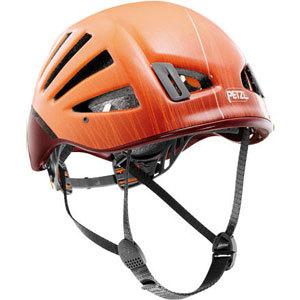
This past winter in Patagonia I was fiddling with my helmet straps a few pitches below the summit of Poincenot. Forgetting to buckle up the chin strap, I started climbing again. Predictably, the helmet fell off and rocketed down a chossy gully. Back in camp, I scrounged up my spare helmet, an older Petzl Ecrin Roc, for the next adventure into the alpine. At 445 grams, the Ecrin Roc was by no means lightweight, and moving my head felt like petzl-meteor-3exercise.

I picked up the Petzl Meteor III from the Moab Post Office in April and promptly took it to the tottering towers of River Road to climb Dolofright, Infrared, and Iron Maiden. At 235 grams the Petzl Meteor III is extremely lightweight, and throughout the day I had to tap my head to make sure the helmet was still on. The day was warm, and though my shoes threatened to slide off the creaky sandstone, my head stayed cool and dry. I was impressed.

Since then the Meteor III has been my faithful companion on long routes in Squamish as well as when teaching anchors on the Smoke Bluffs. Squamish in the spring can be unbearably humid, and this spring was no exception. Yet, the Petzl Meteor once again amazed me with its outstanding ventilation. The polystyrene impact liners are not only comfortable, but they also help the helmet stay firmly anchored to my head, never shifting or slipping sideways. Also, the helmet adjustment slides back into the helmet for easy storage and therefore doesn’t get caught on anything.

Durability is however an intrinsic problem with any lightweight helmet. My spare Ecrin Roc has taken volleys of small stones over the years, but remains sturdy and strong. The same can’t be said for the Meteor III, and such helmets need to be retired once hit by a big stone. I would therefore stick to a heavier helmet in places exposed to lots of loose rock and save the Meteor for areas offering more solid features.

The Meteor III is the best helmet I have ever worn, and it’s so light and comfortable that I no longer have any excuses to leave my helmet behind on any adventure, local crag or big alpine route alike.

Pros: Light; comfortable; breathable; cool orange racing stripes for speed.

Cons: Durability is questionable, but hey, that’s just the trade-off with lightweight helmets.

Rating:

* Source : – http://www.alpinist.com/

** see : – The MARABUT tents. - Namioty Marabut /Version polish and english/

Kask Meteor III – PETZL.

Nowy kask Petzla. Wyjątkowy design, idealny dla wspinaczy, którzy chcą podkreślić swój styl. petzl-meteor
- ultralekki kask wspinaczkowy (235g), znakomicie przewiewny – aż 87 cm2 powierzchni wentylacyjnej
- komfort zapewniony przez wewnętrzną wkładkę ze spienionego polistyrenu
- prosta i skuteczna regulacja wszystkich parametrów: obwodu i położenia opaski na głowie, regulacja przód / tył.
- cztery zewnętrzne zaczepy do mocowania czołówki oraz osłony na twarz VIZION
- dostarczany z workiem do transportu
CE /UIAA
jeden rozmiar: 53-61 cm.

- oryginal post by : - http://himalman.wordpress.com/

goryonline.com

* zapraszam do subskrypcji mojego bloga :

AddThis Feed Button

** zapraszam na relacje z wypraw polskich himalaistów.

Equipment.

Posted by himalman On 5/29/2009 04:55:00 pm 0 comments

Sociofluid

Promote cool website

Climbing courses and training - PZA Climbing Center in Tatras
One of best website about Mt Everest
www.Everest1953.co.uk
You can help

Trekking agency

advertise on blog

MY Favorite books...


    Polish Himalayas on Facebook

    Great tops for everyone!

    Mountaineering is my hobby and profession of walking, hiking, trekking and climbing up mountains. It is also sometimes known as alpinism, particularly in Europe.

    Picasa Web Albums

    Himalman's Weblog